- 1 Introduction
- 2 Understanding the Swadeshi SaaS Movement
- 3 Video and Audio Summary
- 4 USA WhatsApp CEO Political Reactions Swadeshi SaaS — What Was Said
- 5 Political Leaders Weigh In — India vs Global Tech
- 6 Zoho’s Vision for India’s Digital Independence
- 7 My Perspective as an Indian Tech Professional
- 8 Comparing WhatsApp, Arattai & Ulaa — Features and Philosophy
- 9 The Global Shift Has Begun
- 10 Frequently Asked Questions
Introduction
A few weeks ago, the Indian startup ecosystem quietly shook the global tech community — and it didn’t happen through a flashy product launch or a billion-dollar valuation.
It happened through something far more powerful: the rise of Swadeshi SaaS.
When news started spreading about India’s growing SaaS independence, even the WhatsApp CEO in the USA took notice, hinting at how Indian software products are beginning to redefine global digital behavior.
As someone who’s been working in the Indian SaaS space for years, I can tell you — this reaction wasn’t unexpected. It was long overdue.
Understanding the Swadeshi SaaS Movement
What “Swadeshi SaaS” Means in 2025
Swadeshi SaaS refers to Software-as-a-Service solutions built in India, by Indian companies, for the world. These platforms focus on privacy, transparency, and data localization — three key pillars that separate them from global giants like Google or Meta.
In 2025, this movement represents more than technology — it’s a statement of digital independence. Indian entrepreneurs are building tools that compete head-on with Silicon Valley, proving that innovation doesn’t always require foreign investment.
How Zoho Arattai and Ulaa Became Global Talking Points
Zoho Arattai emerged as India’s secure alternative to WhatsApp, promising encrypted communication without ads or data mining. Ulaa, on the other hand, redefined browsing with built-in privacy controls and no user tracking.
Their clean design, simple onboarding, and transparent policies have made them global examples of how Swadeshi software can scale without compromising trust.
Video and Audio Summary
Prefer watching instead of reading? Here’s the complete video and audio summary of this post — learn how to set up your Small Business BI Mistakes: 5 Pitfalls You Must Avoid.
USA WhatsApp CEO Political Reactions Swadeshi SaaS — What Was Said

Official Statements from WhatsApp Leadership
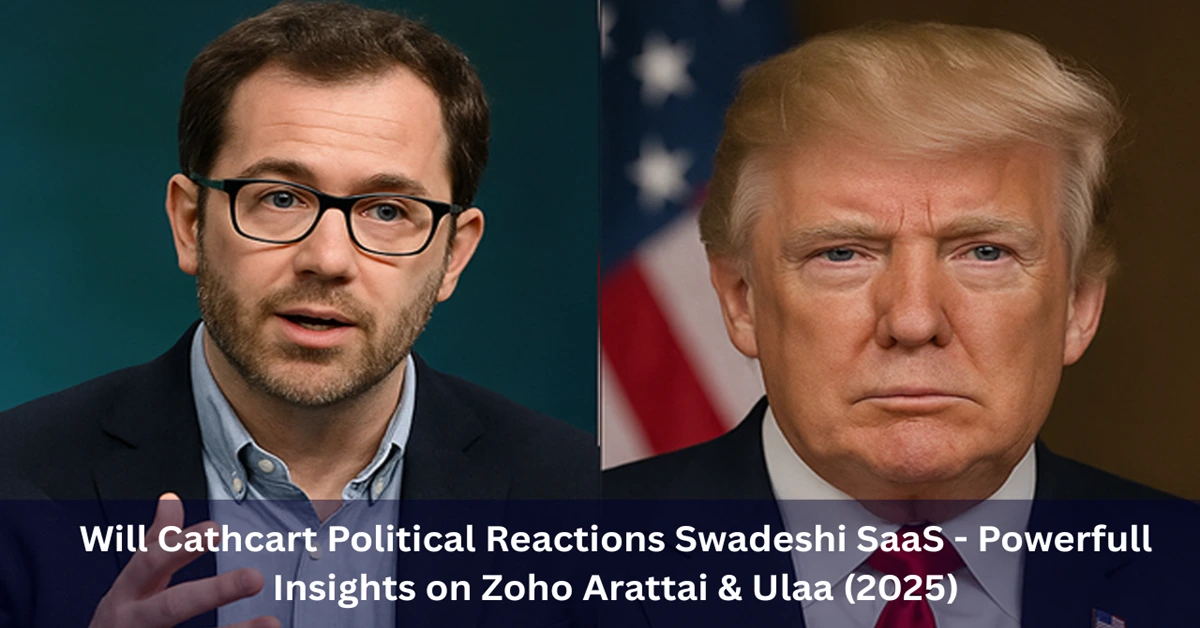
In recent interviews, usa whatsapp ceo political reactions swadeshi saas became a trending topic across platforms. When asked about local alternatives like Arattai, WhatsApp CEO Will Cathcart said that healthy competition encourages innovation and keeps companies accountable. He acknowledged that markets like India are redefining what users expect from communication apps — especially regarding privacy and regional relevance.
Cathcart emphasized that WhatsApp will continue to invest in encryption and secure communication, but he also noted that global apps must adapt to local needs to stay relevant.
Privacy, Encryption & Competition — The CEO’s Perspective
While Cathcart didn’t directly name Zoho or Arattai, he consistently spoke about respecting user choice and regional platforms. His statement — “Every user deserves a safe and private messaging experience, no matter where they live” — reflects how WhatsApp views competition as an opportunity to improve rather than a threat.
Subtle References to Indian Tech Alternatives
In tech forums, several U.S. executives hinted at India’s growing strength in SaaS exports. Meta insiders reportedly view Zoho’s rise as a “positive disruption” — one that pushes the global ecosystem toward privacy-first models.
Political Leaders Weigh In — India vs Global Tech
Indian ministers joined the usa whatsapp ceo political reactions swadeshi saas conversation, reinforcing India’s stand on self-reliance.
PM Narendra Modi on Swadeshi SaaS
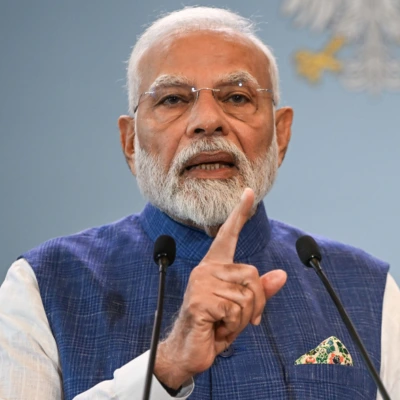
“India’s digital growth is no longer dependent on global platforms. The rise of Swadeshi SaaS shows that we have the talent, technology, and vision to lead the world in software innovation.”
Prime Minister Narendra Modi has consistently emphasized Aatmanirbhar Bharat (self-reliant India), and his view aligns strongly with India’s Swadeshi SaaS movement. Under his leadership, policies encouraging data localization, cloud infrastructure, and startup innovation have created the perfect environment for platforms like Zoho Arattai and Ulaa to thrive globally.
Amit Shah on Swadeshi SaaS
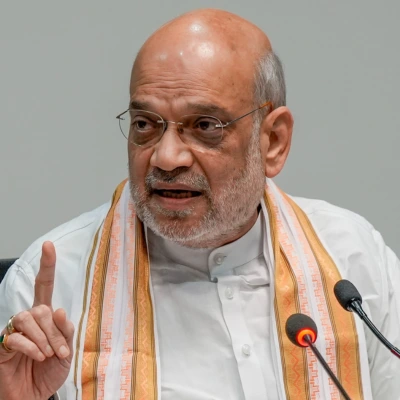
“Swadeshi technology is not just an alternative — it’s India’s responsibility. Every Indian-made platform represents national strength, security, and self-confidence in the digital world.”
Union Home Minister Amit Shah highlighted that promoting Indian-made SaaS products like Zoho Arattai and Ulaa strengthens cybersecurity and data ownership. His statements reflect the government’s larger vision of protecting national interests while encouraging innovation rooted in India’s cultural and technological values.
Indian Ministers Champion Local Apps
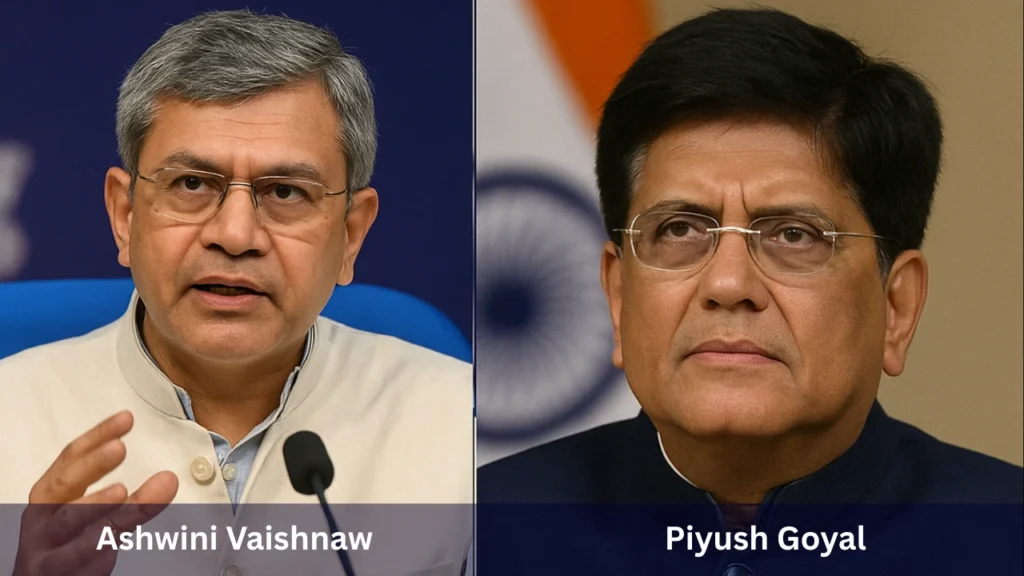
Leaders like Ashwini Vaishnaw (IT Minister) and Piyush Goyal (Commerce Minister) have publicly praised platforms such as Arattai and Ulaa. Their statements emphasize the importance of data sovereignty and reducing dependence on foreign software.
In one address, Vaishnaw said, “Our goal is to make India not just a consumer of global tech, but a creator of it.” This sentiment echoes throughout the government’s digital vision.
U.S. Political Viewpoints on Digital Sovereignty

In the U.S., conversations around India’s Swadeshi SaaS rise are being seen as part of a healthy competitive shift in the global tech balance. Policymakers acknowledge that India’s focus on local innovation aligns with global calls for safer and more transparent data ecosystems.
Reactions from Tech Policy Analysts & Industry Experts
Tech analysts view India’s Swadeshi wave as a catalyst for global software diversification. By creating secure, affordable, and independent SaaS tools, India is setting an example for other emerging markets to build domestic tech capacity.
Zoho’s Vision for India’s Digital Independence

Sridhar Vembu’s Philosophy of Self-Reliance
Zoho’s founder Sridhar Vembu believes that the usa whatsapp ceo political reactions swadeshi saas narrative strengthens India’s digital leadership. He has been a vocal advocate for digital self-reliance. He believes India should lead in tech innovation by focusing on long-term sustainability rather than short-term profits.
In his words:
“If we control our technology, we control our destiny.”
This philosophy drives Zoho’s approach to every product — from business software to everyday communication tools like Arattai.
Ulaa and Arattai as Privacy-First Alternatives
Both Arattai and Ulaa stand apart for their no-ads, no-tracking, no-compromise model. They prioritize user trust over monetization, showing that profitability and ethics can coexist in software design.
Their success has proven that privacy-first isn’t a Western idea anymore — it’s now a global expectation led by India.
My Perspective as an Indian Tech Professional
I’ve seen both sides — working with imported tools and homegrown platforms. The difference is becoming clear:
Indian SaaS tools now match global standards while keeping local challenges in mind.
For instance, I recently helped an organization switch from a US-based BI tool to Zoho Analytics.
The result? Faster reports, lower costs, and better data privacy — all without losing features.
This kind of outcome builds long-term trust — something foreign tools rarely sustain in our market.
Comparing WhatsApp, Arattai & Ulaa — Features and Philosophy
| Feature | Arattai | Ulaa | |
|---|---|---|---|
| Ownership | Meta (USA) | Zoho (India) | Zoho (India) |
| Core Focus | Messaging & calls | Private messaging | Privacy-based web browsing |
| Monetization | Ads, business API | No ads, free use | No tracking or ads |
| Data Storage | Global servers | India-based servers | India-based servers |
| Unique Value | End-to-end encryption | Swadeshi privacy focus | Private browsing ecosystem |
This comparison shows how Indian SaaS products are competing not just on features — but on philosophy. Arattai and Ulaa represent the idea that technology should serve people, not the other way around.
The Global Shift Has Begun
It’s not just about India anymore.
Global tech observers are realizing that the next big SaaS innovation may not come from California — it might come from Chennai, Pune, or Bangalore.
Even if global CEOs react cautiously, the reality is — Swadeshi SaaS is no longer a regional experiment. It’s a global alternative.
And that’s exactly what makes India’s SaaS journey so exciting right now.
Final Thought
The WhatsApp CEO’s reaction is symbolic — not defensive. It’s an acknowledgment that the world is changing.
India is no longer the backend factory of global software; it’s becoming the frontline innovator.
As someone deeply involved in this ecosystem, I feel proud every time a Swadeshi product gets global attention.
Because this is more than a business story — it’s the story of India’s digital independence.
Frequently Asked Questions

What is the meaning of Swadeshi SaaS?
Swadeshi SaaS stands for Software-as-a-Service made in India — designed, developed, and hosted by Indian companies. It promotes digital self-reliance by reducing dependency on foreign software and focusing on data privacy, transparency, and localized innovation.
What did the USA WhatsApp CEO say about Swadeshi SaaS?
WhatsApp CEO Will Cathcart hasn’t named Indian apps like Arattai or Ulaa directly, but he has publicly supported healthy competition and regional innovation. His remarks on encryption, privacy, and user choice align with India’s Swadeshi SaaS vision of privacy-first communication tools.
How does Swadeshi SaaS compare to global SaaS platforms like WhatsApp or Google?
Swadeshi SaaS products like Zoho Arattai and Ulaa differ from global tools by offering local data hosting, ad-free usage, and strong privacy controls. While global platforms focus on scale and monetization, Indian SaaS products focus on trust, transparency, and national data sovereignty.
What are Zoho Arattai and Ulaa?
Zoho Arattai is India’s homegrown messaging app that provides secure, ad-free communication. Ulaa is Zoho’s privacy-focused browser designed to protect users from trackers and data profiling. Both symbolize India’s growing confidence in building world-class, Swadeshi SaaS platforms.
Why are Indian leaders supporting Swadeshi SaaS?
Indian ministers like Ashwini Vaishnaw and Piyush Goyal advocate Swadeshi SaaS because it strengthens India’s digital sovereignty. It ensures sensitive data stays within the country and supports Indian talent and innovation instead of relying on global tech monopolies.
What was the global reaction to India’s Swadeshi SaaS movement?
Globally, India’s Swadeshi SaaS is viewed as a powerful example of digital independence. Analysts from the U.S. and Europe see it as a healthy step toward decentralized technology ecosystems, inspiring other nations to build secure, local alternatives to Big Tech.
How do Zoho’s Arattai and WhatsApp differ in terms of privacy?
While both offer encryption, Arattai doesn’t rely on ad-based revenue and doesn’t share user data with third parties. WhatsApp, owned by Meta, follows a global data model but maintains end-to-end encryption. The main difference lies in Arattai’s Indian-hosted privacy approach.
What is the role of Sridhar Vembu in promoting Swadeshi SaaS?
Sridhar Vembu, CEO of Zoho, is the driving force behind India’s Swadeshi SaaS revolution. His philosophy emphasizes self-reliance, ethical software, and decentralization. Under his leadership, Zoho builds tools that compete globally while staying true to Indian roots.
Will Swadeshi SaaS affect global tech giants like WhatsApp and Google?
Yes — but positively. Swadeshi SaaS pushes global players to improve privacy and transparency. It encourages innovation through competition and helps create a more balanced, ethical global tech ecosystem.
What does Swadeshi SaaS mean for India’s digital future?
Swadeshi SaaS represents India’s shift from being a technology consumer to a technology creator. It’s shaping a new digital era where India leads with innovation, protects user data, and inspires other nations to build technology rooted in trust and independence.
It blends automation, simplicity, and affordability
👉 Swadeshi SaaS: The Ultimate 50+ Zoho Products Guide
👉 Zoho Analytics vs Google Data Studio
👉 30 Essentials Zoho Products in 2025
Sources & Disclaimer
The insights, statements, and interpretations shared in this article are based on publicly available interviews and verified media reports featuring WhatsApp CEO Will Cathcart, along with other global and Indian leaders.
Key references include:
- The Economic Times (March 2025): Will Cathcart on WhatsApp privacy, encryption, and ad policies.
- The Guardian (September 2025): Reports on Meta’s privacy discussions and leadership statements.
- Bloomberg (May 2025): Analysis of WhatsApp’s business strategy and views on competition.
- Reuters (October 2025): Coverage of India’s Swadeshi SaaS push, including Zoho’s Arattai and Ulaa platforms.
- Livemint (2025): Overview of Ulaa’s privacy-focused browser features.
While Will Cathcart has not specifically mentioned Zoho Arattai or Ulaa by name, his public comments on privacy, competition, and regional innovation align closely with India’s Swadeshi SaaS movement discussed in this article.
This blog aims to provide contextual insights for readers and does not represent any official position of WhatsApp, Meta, or government authorities.