- 1 Introduction — A New Era of India’s Educational Tech Freedom
- 2 The Problem with Imported LMS Tools
- 3 Birth of Swadeshi SaaS in Education
- 4 The Core Strengths of Indian Education ERPs
- 5 Case Study: How One Indian ERP Outperformed a Global LMS
- 6 Why the Shift Matters: Building Digital Independence
- 7 Challenges Ahead for Swadeshi SaaS Founders
- 8 The Road Ahead — Global Vision for Indian EdTech SaaS
- 9 Conclusion — From Dependence to Digital Freedom
- 10 FAQ’s on Swadeshi SaaS in Education
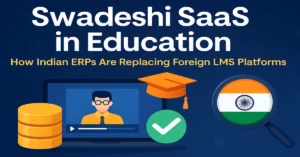
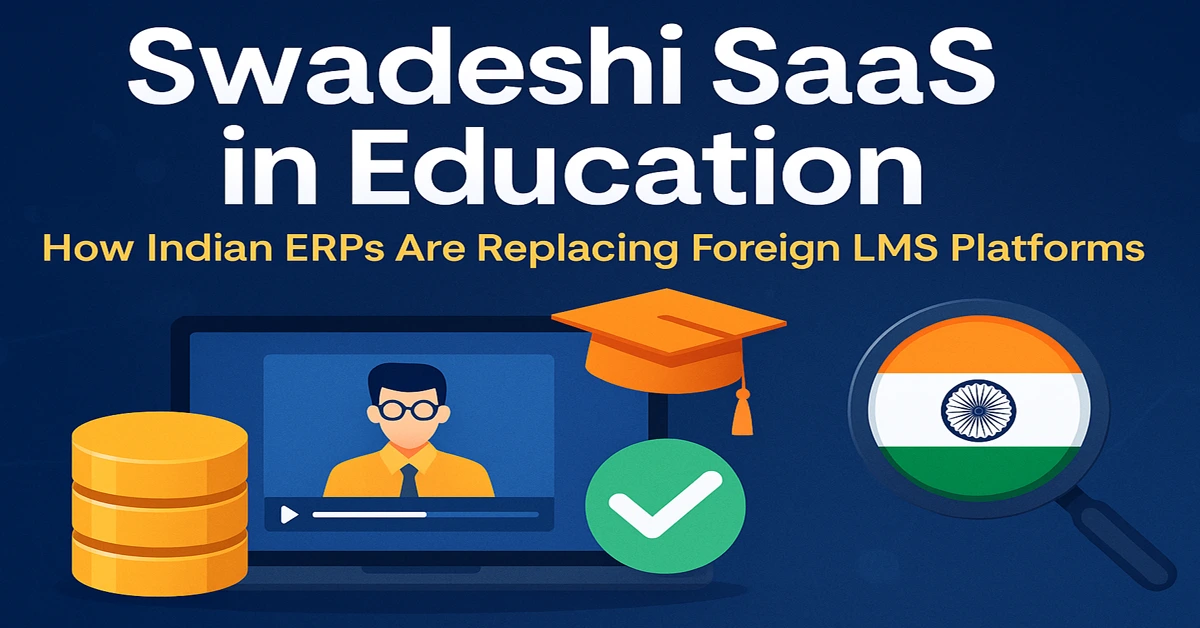
Introduction — A New Era of India’s Educational Tech Freedom
As per my experience picture a school in Jaipur or a college in Coimbatore running entirely on Indian-built software. Attendance, assignments, communication, and exams — all handled through tools made for India, by India.
That’s the essence of Swadeshi SaaS in Education — a silent revolution that’s transforming classrooms across the country.
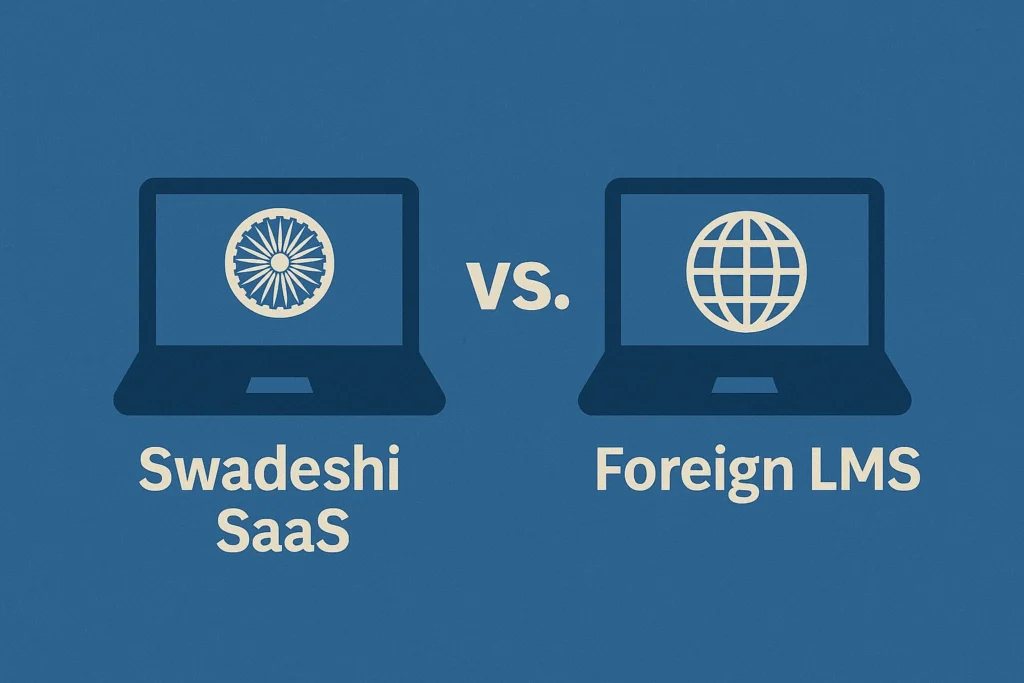
For years, Indian institutions relied heavily on foreign LMS (Learning Management System) tools that were costly, rigid, and often irrelevant to Indian education needs.
Now, things are changing. Indian EdTech startups are creating homegrown ERP systems that don’t just compete with foreign software — they outperform them in affordability, localization, and innovation.
This article explores how Indian ERPs are steadily replacing global LMS platforms, making education more accessible, scalable, and truly self-reliant.
The Problem with Imported LMS Tools
Foreign LMS tools were never designed for India’s diversity. Most charge in dollars, making them unaffordable for schools that already run on tight budgets. Their features often miss the nuances of India’s education system — like multiple boards, regional languages, and UPI-based fee payments.
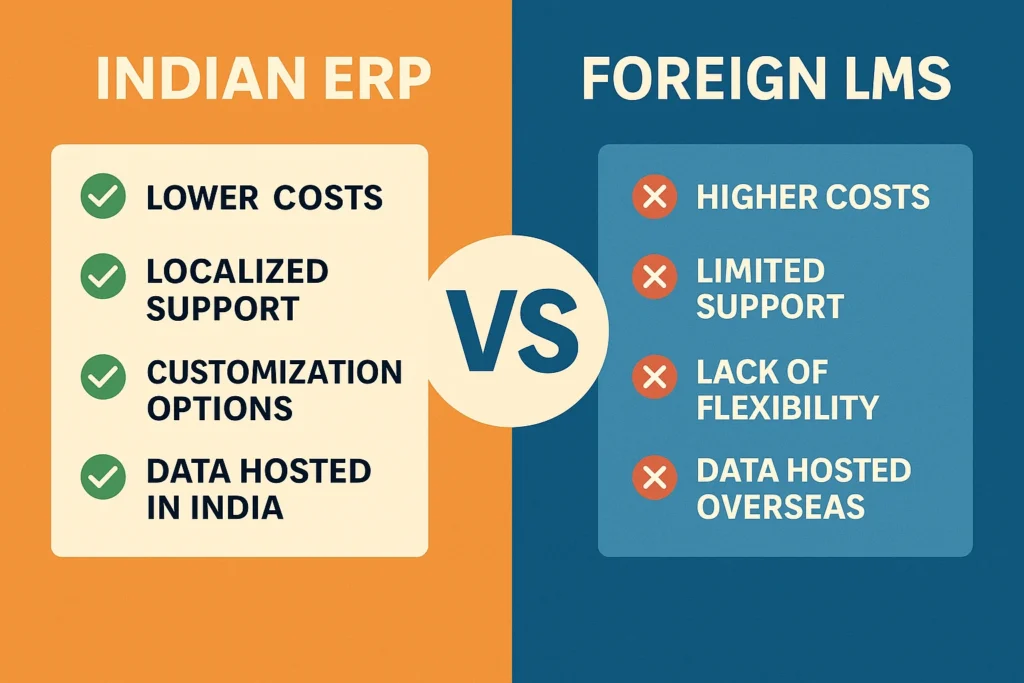
When institutions use imported platforms, they face:
- 💰 Charge in USD, straining school budgets
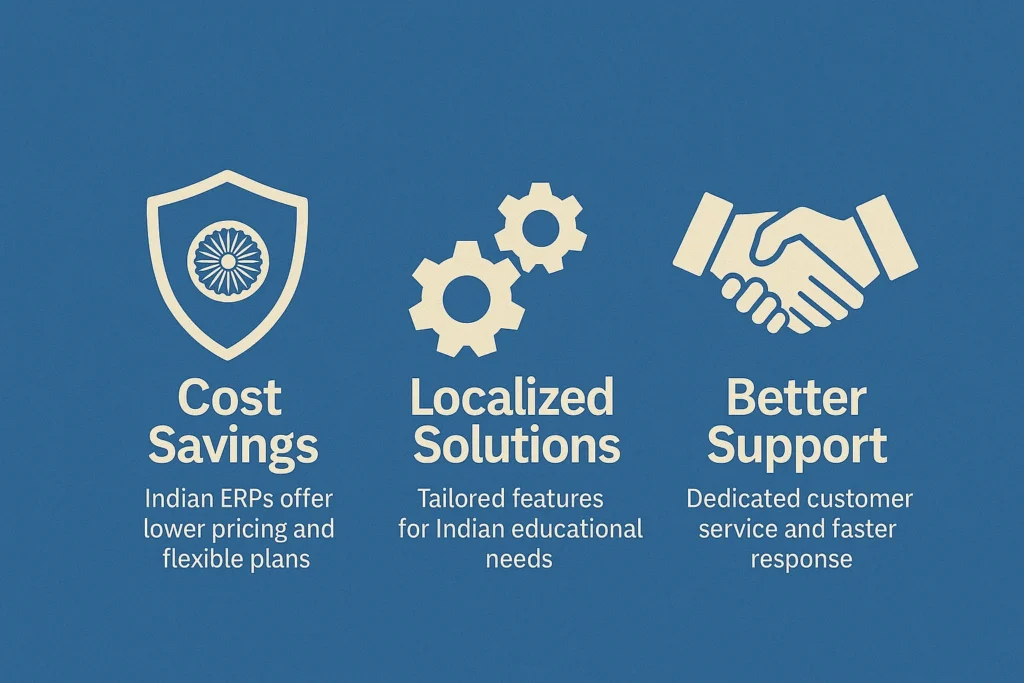
- 📞 Offer delayed support due to time zone differences
- ⚙️ Lack integration with Indian grading, attendance, or fee systems
- 🔒Store student data overseas, risking privacy issues
The result? Many schools pay more for less. This gap inspired Indian tech innovators to build Swadeshi SaaS solutions — purpose-built for Bharat’s classrooms, not borrowed from Silicon Valley’s blueprints.
The growing dissatisfaction with imported LMS platforms created the perfect stage for Swadeshi SaaS in Education to emerge as a reliable, localized alternative.
Learn Online Tutorials from World’s largest plat Udemy
Birth of Swadeshi SaaS in Education
The success of Swadeshi SaaS in Education is rooted in a simple idea — build for India, not just adapt from the West. Around 2018–2020, a new wave of Indian startups realized something simple yet powerful: our schools didn’t need imported complexity — they needed local intelligence.
Companies like TCS iON, Teachmint, Classplus, and open-source pioneers like ERPNext started reimagining what an education ERP could be. These weren’t just software tools; they became ecosystems tailored for Indian institutions.
Here’s what set them apart:
- Support for English, Hindi, and regional languages
- Offline sync for areas with poor internet
- CBSE and state board compliance
- Mobile-first interfaces for students and parents
This “Make-in-India” mindset gave birth to an entirely new category — Swadeshi SaaS in education, built on Indian innovation, hosted on Indian servers, and optimized for Indian users.
The Core Strengths of Indian Education ERPs
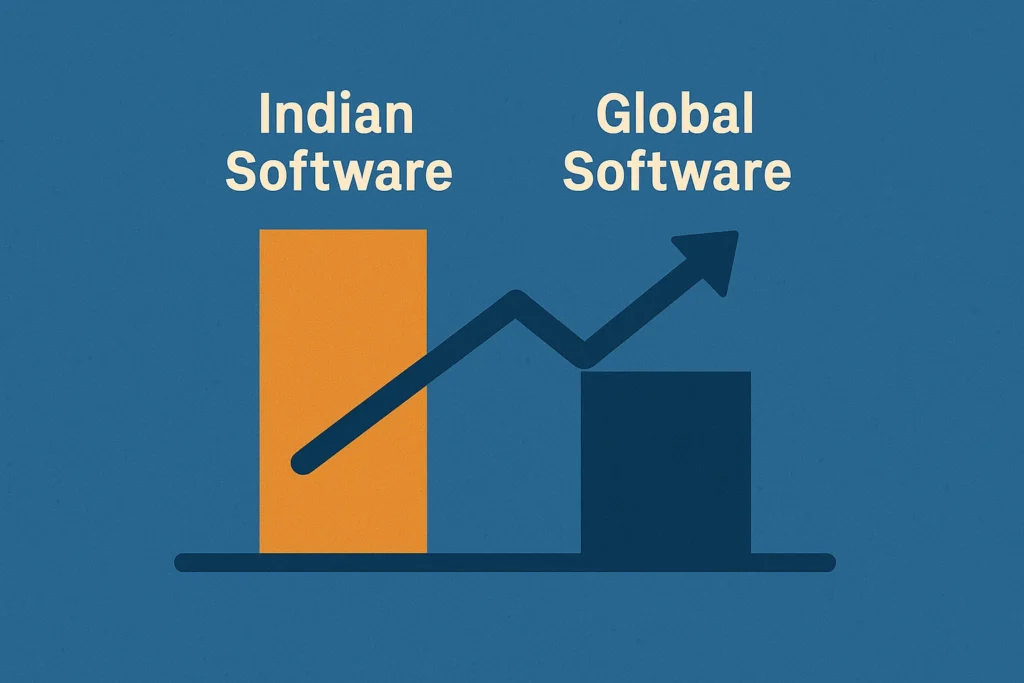
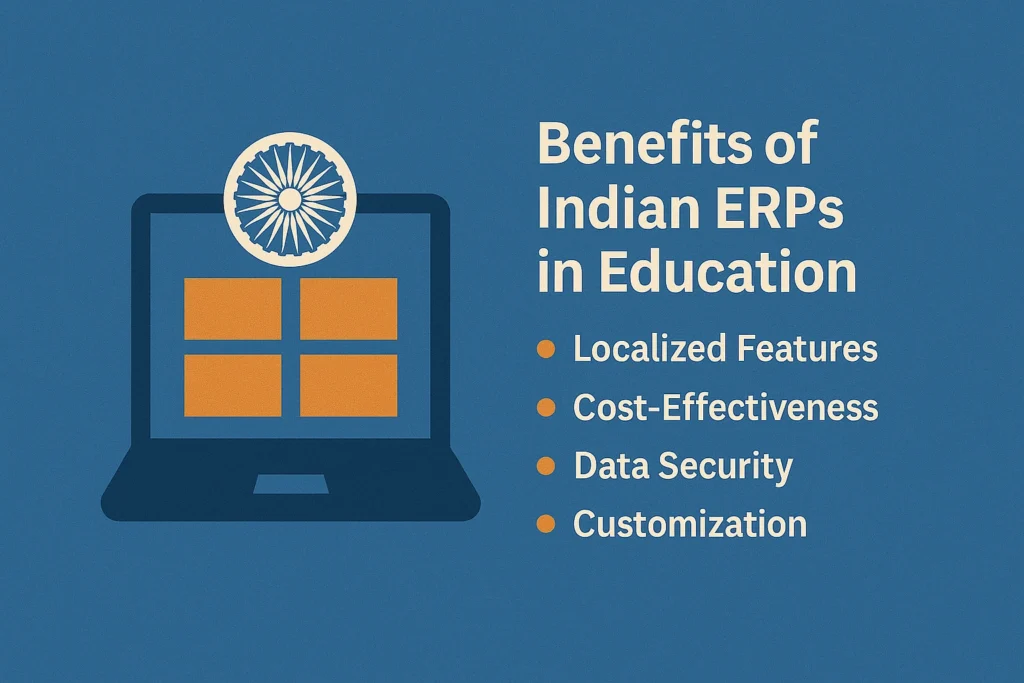
Indian ERPs aren’t competing on glamour; they’re winning on practicality. Each Swadeshi SaaS in Education solution focuses on solving core challenges unique to Indian schools and colleges. Here’s why they’re rapidly replacing global LMS platforms:
1. Affordable for All
Foreign software usually charges per student in USD.. Indian ERPs use flexible pricing — per student, per institution, or even lifetime models. A small school in Mysuru can now afford premium automation for a fraction of the global cost.
2. Localization & Language Support
Swadeshi SaaS tools speak the language of Bharat. Whether it’s Tamil, Marathi, or Kannada, teachers and students can use interfaces in their native tongue. This inclusivity drives adoption, especially in tier-2 and tier-3 cities.
3. Data Security & Indian Hosting
Data sovereignty is now a national priority. Indian ERPs store student and institutional data on Indian servers, ensuring compliance with India’s Data Protection Act — something most foreign LMSs can’t guarantee.
4. Customization for Indian Institutions
Indian schools have unique needs — biometric attendance, UPI fee collections, CBSE grade cards, and SMS alerts to parents. Swadeshi ERPs include these features natively, eliminating the need for costly add-ons.
5. Integration with Government Initiatives
Modern Swadeshi ERPs integrate seamlessly with DigiLocker, NEP 2020 frameworks, and Bharat Stack APIs — helping institutions stay compliant and future-ready.
Case Study: How One Indian ERP Outperformed a Global LMS
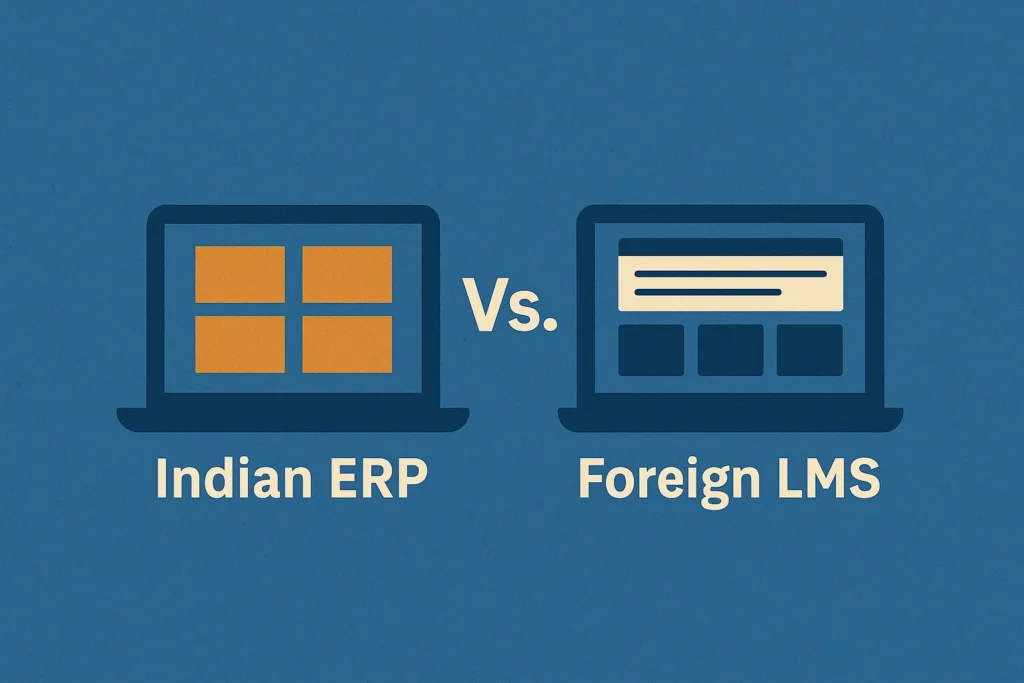
The wider adoption of Swadeshi SaaS in Education is helping institutions transition to digital-first learning ecosystems. Take the example of Sunrise College in Pune. For years, they used a global LMS costing over ₹12 lakh annually. Support tickets took days to resolve, and customization requests were ignored.
In 2023, they switched to a Swadeshi ERP built in Bengaluru. The results were remarkable:
- Cost reduced by 68% within the first year
- Setup completed in 5 days (earlier it took weeks)
- Real-time reporting integrated with their finance module
- 24×7 local support in regional language
Students loved the mobile app interface, while administrators finally gained control over fees, exams, and communication — all under one roof.
This story isn’t an exception; it’s the new norm. Swadeshi ERPs are no longer alternatives — they are upgrades.
Why the Shift Matters: Building Digital Independence
This movement isn’t just about software; it’s about digital independence.
Every time an Indian institute adopts Swadeshi SaaS, it:
- Keeps revenue within the country
- Strengthens India’s local developer ecosystem
- Builds data security and trust among educators
Moreover, Swadeshi SaaS is enabling rural and semi-urban schools to join the digital wave without breaking budgets. For the first time, a school in Nagpur or Ranchi can access the same tech power as one in New Delhi — thanks to Indian innovation.
Challenges Ahead for Swadeshi SaaS Founders
While the progress is impressive, challenges remain:
- Many school administrators are still unaware of Indian alternatives.
- Some state governments continue to favor global vendors.
- Poor internet connectivity in remote areas affects adoption rates.
However, Swadeshi founders are responding smartly — introducing freemium models, offline-sync modes, and state-specific partnerships. With better marketing and government recognition, the adoption curve will only accelerate.
The Road Ahead — Global Vision for Indian EdTech SaaS
Swadeshi SaaS is not just “for India” anymore — it’s “from India, for the world.”
African, Middle Eastern, and Southeast Asian countries share similar education challenges. Indian ERPs are already expanding there with affordable cloud solutions and regional language support.
By 2026, we’ll likely see Indian EdTech companies exporting not just software but also values — affordability, inclusivity, and adaptability.
India is quietly positioning itself as the education SaaS capital of the developing world.
Conclusion — From Dependence to Digital Freedom
The story of Swadeshi SaaS in education is the story of India’s digital maturity. What started as an effort to save costs has become a mission of independence.
When schools use Indian ERPs, they aren’t just adopting technology — they’re embracing self-reliance, security, and innovation. The future of learning belongs to those who build it, and India is doing exactly that. As we move forward, Swadeshi SaaS in Education will stand as the backbone of India’s self-reliant learning transformation.
Education built in India should run on Indian software — that’s true Swadeshi power.
Read More Related Articles
👉 Swadeshi SaaS: The Ultimate 50+ Zoho Products Guide
👉 Zoho Analytics vs Google Data Studio
👉 30 Essentials Zoho Products in 2025
FAQ’s on Swadeshi SaaS in Education
What is Swadeshi SaaS in Education?
It refers to Indian-developed ERP and LMS software built specifically for schools, colleges, and universities, offering local pricing, support, and data control.
How are Indian ERPs better than foreign LMS tools?
Swadeshi ERPs provide localized customization, multilingual support, and Indian data hosting at far lower costs than global platforms.
Which Swadeshi SaaS ERPs are popular in 2025?
Top players include TCS iON, Classplus, Teachmint, ERPNext, and Fedena — each excelling in affordability and adaptability.
Why should Indian institutions adopt Swadeshi SaaS?
They gain full data ownership, better ROI, faster support, and tools designed around Indian education policies and payment systems.
What is the future of Swadeshi SaaS in India’s education sector?
By 2026, Indian ERPs are expected to dominate the education software market, expanding globally while empowering millions of Indian learners.
You can onboard zoho analytics for your business or organization click here to get onboard